For more than a decade, the NBA was ruled by the three-point shot. But as defenses adapted and analytics matured, pure volume shooting has lost its dominance. A smarter era is emerging—defined by matchup hunting, playmaking bigs, elite off-ball movement, and interior efficiency. This article explains why the 3-point revolution has peaked and what’s truly shaping the NBA’s future.
Introduction: The Shot That Changed Basketball—And Why It’s No Longer Enough
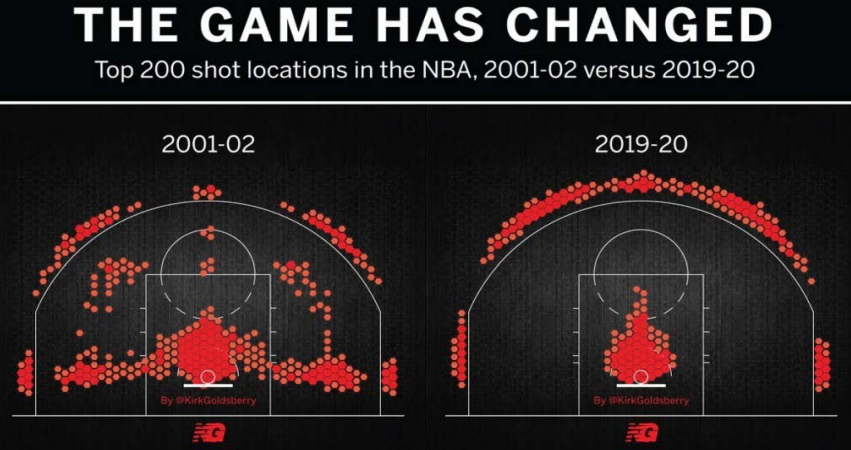
The NBA once lived by a simple mathematical truth: three is greater than two. Teams redesigned offenses, rebuilt rosters, and reeducated players to prioritize spacing and long-range shooting. By the early 2020s, three-point attempts had doubled compared to the early 2000s, and offenses reached historic efficiency.
But basketball never stands still.
Today, fans notice something different. Games feel more physical. Stars are attacking mismatches instead of settling for quick pull-ups. Centers are passing from the elbow. Late-game possessions look slower—but smarter.
The three-point shot hasn’t disappeared. Instead, its monopoly on winning basketball is over.
The NBA has entered a new phase—one driven by adaptability, decision-making, and tactical flexibility. To understand what’s replacing the 3-point revolution, we must first understand why it stopped working as a dominant strategy.
Why the 3-Point Revolution Hit Its Ceiling
The downfall of any dominant strategy begins when everyone learns how to counter it. That’s exactly what happened with three-point basketball.
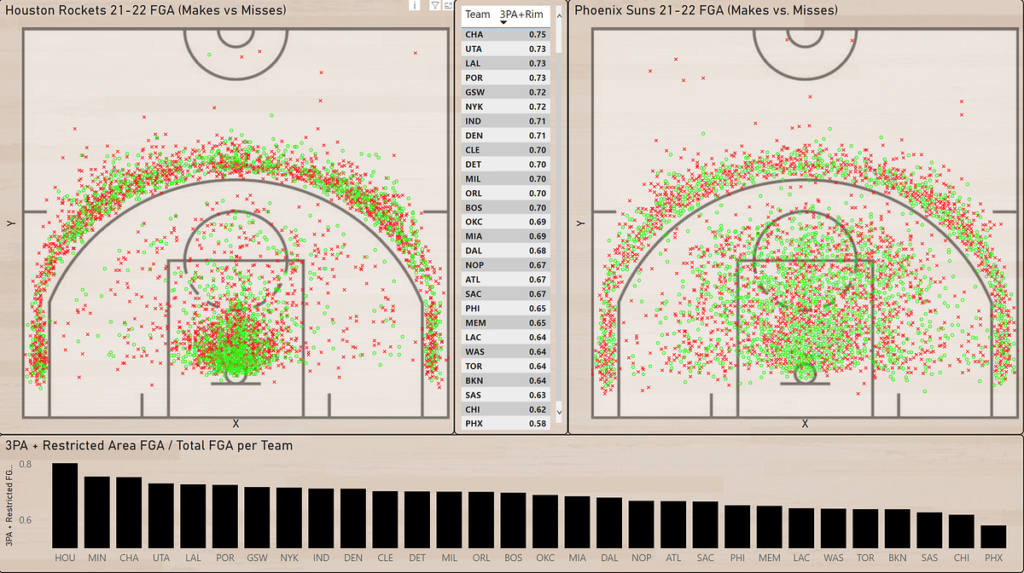
Modern defenses are no longer confused by spacing. Switch-heavy schemes, long wing defenders, and aggressive closeouts have turned many “good” three-point looks into rushed, contested attempts. Teams now force shooters off the line, daring them to finish inside or make complex reads.
In the playoffs especially, high-volume shooting teams face brutal reality. When legs get tired and defenses get familiar, reliance on the three becomes fragile. Cold streaks aren’t just unlucky—they’re catastrophic.
The lesson wasn’t that threes are bad. It was that threes alone are insufficient.
What’s Replacing the 3-Point Revolution in the NBA?
1. Playmaking Bigs Are Replacing Stretch Bigs
The stretch big opened the floor. The playmaking big controls the game.
Instead of standing behind the arc, today’s elite centers operate as offensive hubs—initiating actions, reading defenses, and creating advantages. The clearest example is Nikola Jokic, whose MVP dominance shattered outdated ideas about center play.
Jokic rarely forces threes. Instead, he:
- Draws double teams in the post
- Finds cutters with surgical precision
- Turns defensive pressure into easy buckets
This model is spreading across the league. Teams now prioritize bigs who can think, not just shoot.
The three becomes a weapon that emerges naturally from ball movement—not the starting point of every possession.
2. Matchup Hunting Has Replaced Shot Hunting
The new NBA question isn’t “Is this a three?”
It’s “Who has the advantage right now?”
Modern offenses relentlessly hunt mismatches. Guards attack slow bigs. Forwards post smaller defenders. Centers punish switches. This chess match happens possession by possession.
What makes this approach deadly is its adaptability. If the defense switches, the offense reacts. If help arrives, the ball moves. If nothing opens, stars create late.
This is why players who can score at all three levels—and pass under pressure—are more valuable than ever.
3. The Mid-Range Shot Is Back—With a Purpose
For years, the mid-range jumper was basketball’s villain. Analytics labeled it inefficient. Coaches discouraged it. Development programs erased it.
Now it’s back—because defenses are giving it away.
When defenders chase shooters off the line and protect the rim, space opens at the elbows and short corners. Elite scorers exploit that space ruthlessly, especially in the playoffs.
The difference today is intention. Mid-range shots are no longer default options—they’re pressure valves, used when defenses overcommit elsewhere.
4. Off-Ball Movement Is Replacing Static Spacing
Old spacing was passive. Players stood still, waiting for kick-outs.
New spacing is active.
Modern offenses emphasize:
- Weak-side cuts
- Continuous motion
- Screening without the ball
- Relocation after passes
This movement exhausts defenses mentally and physically. It creates confusion, delayed rotations, and breakdowns that don’t appear in box scores—but win games.
Players who move well without the ball are now just as valuable as shooters who stand still.
5. Defensive Evolution Forced Offensive Evolution
Defense is the silent driver of this shift.
NBA rosters are filled with long, switchable defenders who can guard multiple positions. Traditional plays break down quickly against these lineups. Predictability gets punished.
To survive, offenses must be flexible. The best teams don’t run rigid sets anymore—they operate on principles:
- Read the defense
- Attack weaknesses
- Move decisively
This is why basketball IQ has become one of the league’s most valuable skills.
Real Playoff Evidence: Why This Style Wins When It Matters
Regular seasons reward volume. Playoffs reward solutions.
Every postseason, we see elite shooting teams struggle when:
- Transition threes disappear
- Role players hesitate
- Defenses shrink the floor
Meanwhile, adaptable teams survive cold shooting nights by scoring inside, drawing fouls, and exploiting mismatches.
This is why front offices now prioritize versatility over specialization. A player who can shoot, pass, defend, and adapt is worth more than an elite specialist.
What This Shift Means for the NBA Ecosystem
For players:
Development now emphasizes decision-making, footwork, and versatility—not just shooting range.
For coaches:
Systems must be flexible. Playbooks matter less than principles.
For fans:
The game is becoming smarter. Watch possessions closely—the strategy is richer than ever.
Key Takeaways (Quick Scan)
- The three-point shot still matters—but no longer dominates
- Playmaking bigs are redefining offensive hubs
- Matchup hunting beats volume shooting
- Mid-range scoring thrives in high-pressure moments
- Off-ball movement and IQ separate contenders from pretenders
Frequently Asked Questions (Trending US Searches)
1. Is the NBA really moving away from the three-point shot?
Ans. No. The NBA isn’t abandoning the three; it’s reducing reliance on volume and using it more selectively within balanced offenses.
2. Why do teams shoot fewer threes in the playoffs?
Ans. Playoff defenses take away predictable shots, forcing teams to score inside, from mid-range, or via mismatches.
3. Is analytics failing in modern basketball?
Ans. Analytics aren’t failing—they’re evolving. Context, lineup data, and situational efficiency now matter more than raw shot charts.
4. Are mid-range shots efficient again?
Ans. In the right situations, yes—especially late-game and playoff scenarios where defenses overprotect the rim and three-point line.
5. Who benefits most from the post-3-point era?
Ans. Versatile stars who can pass, score at multiple levels, and read defenses benefit the most.
6. How does this change roster construction?
Ans. Teams value multi-skill players over one-dimensional shooters.
7. Will youth basketball follow this trend?
Ans. Gradually. Expect more emphasis on playmaking, footwork, and decision-making over early specialization.
8. Are positionless lineups becoming the norm?
Ans. Yes. Positions matter less than skill combinations and defensive versatility.
9. Does defense matter more than offense now?
Ans. Defense has caught up, forcing offenses to become more creative and adaptable.
10. What’s the biggest myth about the 3-point revolution?
Ans. That it ruined basketball—when it actually pushed the game into its next, smarter evolution.
Final Verdict: Basketball Didn’t Regress—It Leveled Up
The end of the 3-point revolution doesn’t signal decline. It signals maturity.
Basketball has entered an era where thinking beats shooting, versatility beats volume, and adaptability beats rigid systems. The teams that thrive won’t abandon the three—but they won’t worship it either.
The future of the NBA belongs to those who can read the game faster than the defense can react.
And that future is already here.